Do either of the following:
1. Research on the Spanish Modernismo of the Generacion de 1927 and
speculate on similarities/differences with what you know of Anglo-Saxon
Modernism (NOTE. you may want to check the notes in the end of your
anthology
2. Research on similarities between Hughes'
and Lorca's poetics and ideologic convictions that may have lead to the
translations of Hughes (and perhaps justiy some traslation choices as
well)
Here, a couple of poems by Hughes,
"Death of Do Dirty: A Rounder's Song" (in Fine Clothes to the Jew, 1927)
O, you can't find a buddy
Any old time
'Ll help you out
When you ain't got a dime.
He was a friend o' mine.
They called him Do Dirty
Cause he was black
An' had cut his gal
An' shot a man in de back.
Ma friend o' mine.
But when I was hungry,
Had nothin' to eat,
He bought me corn bread
An' a stew o' meat.
Good friend o' mine.
An' when de cops got me
An' put me in jail
If Dirty had de money
He'd go ma bail.
O, friend o' mine.
That night he got kilt
I was standin' in de street.
Somebody comes by
An' says yo' boy is gettin' beat.
Ma friend o' mine.
But when I got there
An' seen de ambulance
A guy was sayin'
He ain't got a chance.
Best friend o' mine.
An' de ones that kilt him, —
Damn their souls, —
I'm gonna fill 'em up full o'
Bullet holes.
Ma friend o' mine.
"Nude Young Dancer" (in Weary Blues, 1925)
What jungle tree have you slept under,
Midnight dancer of the jazzy hour?
What great forest has hung its perfume
Like a sweet veil about your bower?
What jungle tree have you slept under,
Night-dark girl of the swaying hips?
What star-white moon has been your mother?
To what clean boy have you offered your lips?
Poème d'Automne (in Weary Blues, 1925)
The autumn leaves
are too heavy with color.
The slender trees
on the vulcan road
are dressed in scarlet and gold
like young courtesans
waiting for their lovers.
But soon
the winter winds
will strip their bodies bare
And then
the sharp, sleet-stung
caress of the cold
will be their only
Love.
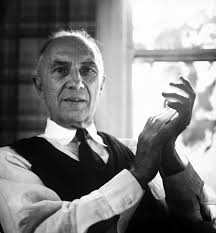
and Lorca's photograph (1898-1936)
quarta-feira, 26 de abril de 2017
Two Poems by William Carlos Williams
from Spring And All (1923)
By the road to the contagious hospital
under the surge of the blue
mottled clouds driven from the
northeast—a cold wind. Beyond, the
waste of broad, muddy fields
brown with dried weeds, standing and fallen
patches of standing water
the scattering of tall trees
All along the road the reddish
purplish, forked, upstanding, twiggy
stuff of bushes and small trees
with dead, brown leaves under them
leafless vines—
Lifeless in appearance, sluggish
dazed spring approaches—
They enter the new world naked,
cold, uncertain of all
save that they enter. All about them
the cold, familiar wind—
Now the grass, tomorrow
the stiff curl of wildcarrot leaf
One by one objects are defined—
It quickens: clarity, outline of leaf
But now the stark dignity of
entrance—Still, the profound change
has come upon them: rooted they
grip down and begin to awaken
This Is Just to Say
By the road to the contagious hospital
under the surge of the blue
mottled clouds driven from the
northeast—a cold wind. Beyond, the
waste of broad, muddy fields
brown with dried weeds, standing and fallen
patches of standing water
the scattering of tall trees
All along the road the reddish
purplish, forked, upstanding, twiggy
stuff of bushes and small trees
with dead, brown leaves under them
leafless vines—
Lifeless in appearance, sluggish
dazed spring approaches—
They enter the new world naked,
cold, uncertain of all
save that they enter. All about them
the cold, familiar wind—
Now the grass, tomorrow
the stiff curl of wildcarrot leaf
One by one objects are defined—
It quickens: clarity, outline of leaf
But now the stark dignity of
entrance—Still, the profound change
has come upon them: rooted they
grip down and begin to awaken
This Is Just to Say
I have eaten
the plums
that were in
the icebox
and which
you were probably
saving
for breakfast
Forgive me
they were delicious
so sweet
and so cold
terça-feira, 25 de abril de 2017
Translation: Literature and Letters é um texto que fala sobre a tradução, centrando-se
principalmente na poesia. O texto divide-se em duas partes distintas.
Na primeira parte, o autor começa por ampliar
os limites tradicionais da tradução, onde dá como exemplo um menino que pede
para lhe traduzirem uma palavra desconhecida para uma linguagem que seja
compreensível para ele.
A partir daqui, Paz salta para as ideias que
surgiram acerca da tradução ao longo da história, ou seja, faz um paralelismo
entre a história do pensamento humano e as concepções distintas que a sociedade
foi tendo sobre a tradução.
O
autor apresenta-nos também a sua opinião sobre a tradução literal e relaciona-a
com a metáfora e a metonímia.
Na
segunda parte do texto, o autor comenta a ideia de que apenas os poetas
deveriam traduzir poesia porque eles têm a sensibilidade linguística
necessária. Contudo, Octavio Paz não concorda com tal afirmação.
Todavia, aparece o problema da criatividade.
Um poeta tratará consciente ou inconscientemente de fazer um poema novo,
próprio e original, enquanto que um tradutor tentará aproximar-se e manter-se
próximo do original; estas duas facetas entram em conflito com frequência.
Nesta última parte, Paz
compara também o trabalho de tradução com o de criação descrevendo as
diferenças entre tradução literária e ou cientifica, com a tradução de poesia.
Ana Rita Alves
Cátia Passinhas
quinta-feira, 20 de abril de 2017
Homework for April 27
One of the following
- read William Carlos Williams's "imaginary translation" in p. 185 of the anthology and think of his purpose in producing such a genre as "imaginary translation" - especially considering his experience of translating popular ballads (romances) from Spanish (for instance, the song "Alamos del Prado" with two versions, a definite one in p. 179 and an earlier one in p. 183-184), as well as contemporary Spanish poets such as Octavio Paz (p. 180-182).
- choose a mos striking passage of Octavio Paz's essay on Translation (189-194) and produce a commentary.
- read William Carlos Williams's "imaginary translation" in p. 185 of the anthology and think of his purpose in producing such a genre as "imaginary translation" - especially considering his experience of translating popular ballads (romances) from Spanish (for instance, the song "Alamos del Prado" with two versions, a definite one in p. 179 and an earlier one in p. 183-184), as well as contemporary Spanish poets such as Octavio Paz (p. 180-182).
- choose a mos striking passage of Octavio Paz's essay on Translation (189-194) and produce a commentary.
quarta-feira, 19 de abril de 2017
A Methodology for
Translation
Vinay e Darbelnet (1995) Comparative
Stylistics of French and English
Introdução
Desde a década de 1950 que se desenvolvem abordagens para
identificar e categorizar todas as acções que são realizadas durante o processo
de tradução.
Um dos modelos mais conhecidos e representativos é o modelo de
Vinay e Darbelnet. Este modelo propõe duas estratégias (tradução directa e
tradução oblíqua) e sete procedimentos:
Dentro da tradução directa:
1) Empréstimo 2) Decalque 3) Tradução Literal
Dentro da tradução oblíqua:
4) Transposição 5) Modulação 6) Equivalência 7) Adaptação
Utiliza-se a estratégia de tradução directa quando é possível fazer uma tradução literal. Isto
acontece quando estamos na presença de um paralelismo estrutural (as categorias
gramaticais das palavras são idênticas) ou de um paralelismo metalinguístico
(os conceitos são idênticos).
A estratégia de tradução oblíqua é utilizada quando há diferenças estruturais ou
metalinguísticas e é necessário proceder a alterações estruturais ou lexicais.
Procedimentos
Em seguida descrevem-se de forma resumida os sete procedimentos
de tradução propostos no modelo de Vinay e Darbelnet.
Empréstimo
O
empréstimo é usado quando há lacunas metalinguísticas (ex: Um conceito da
língua de partida que é desconhecido na língua de chegada). O texto da língua
de partida é reproduzido, sem alterações, na língua de chegada.
Decalque
O decalque
é um tipo de empréstimo com uma adaptação ortográfica ou uma tradução literal
de cada um dos seus elementos.
Tradução Literal
A tradução
literal é também conhecida por tradução à palavra. Cada palavra é traduzida e não
há alteração sintáctica.
Transposição
Consiste em alterar a categoria gramatical de uma palavra sem alterar a mensagem original.
Existem transposições obrigatórias e opcionais.
Modulação
Consiste numa mudança do ponto de vista semântico. Há uma alteração da
perspectiva. Existem modulações obrigatórias e opcionais.
Equivalência
Consiste em descrever uma dada situação através de meios estilísticos ou
estruturais diferentes dos da língua de partida.
Com este método produzem-se textos equivalentes.
Adaptação
Consiste em substituir as referências culturais, quando a situação na
língua de partida não existe na língua de chegada.
Estes procedimentos operam no plano lexical, sintáctico e da mensagem. O papel do tradutor é seleccionar
de entre as opções disponíveis a que melhor expressa as nuances da mensagem.
Bibliografia
Vinay e Darbelnet (1995) Comparative Stylistics of French
and English. Amsterdam: John Benjamins Publishing Company
Munday, Jeremy (2014) Introdução aos Estudos de Tradução.
Portugal: Edições Pedago
Helder Ferreira e Baptista Geraldo
terça-feira, 18 de abril de 2017
Subscrever:
Mensagens (Atom)